
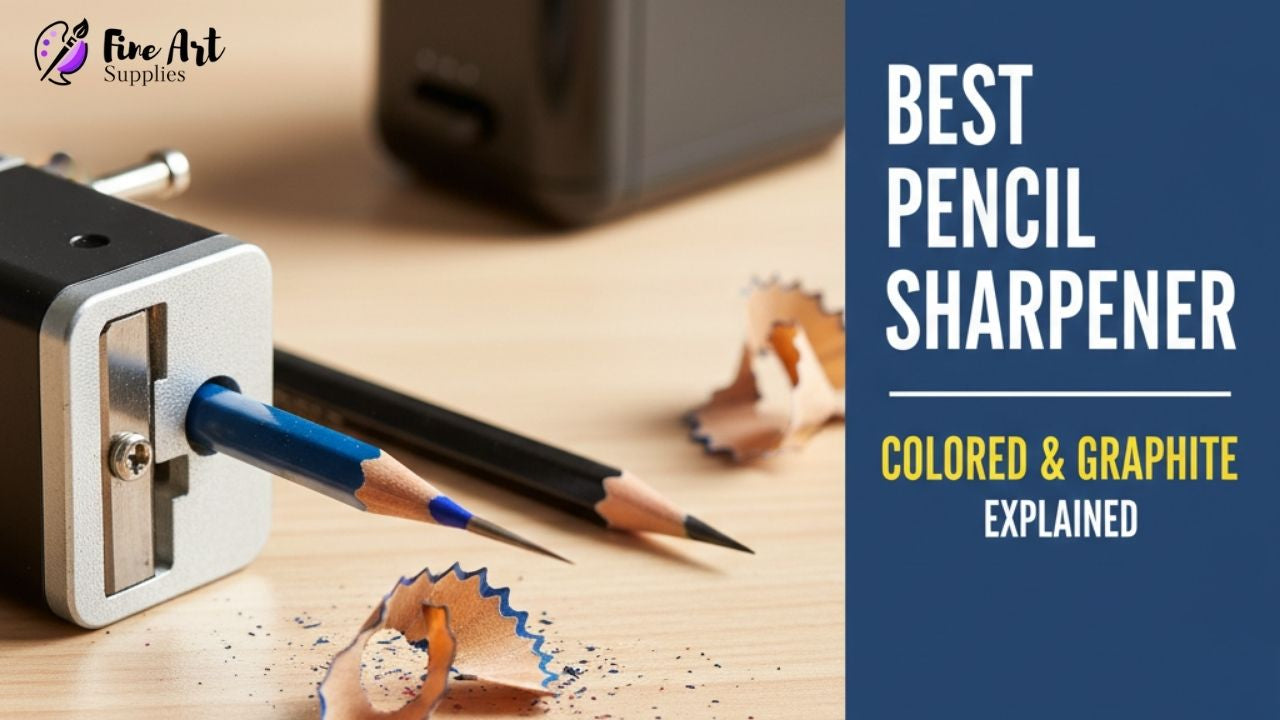
Best Sharpener for Colored and Graphite Pencils Explained
A blunt pencil can ruin fine details, tear paper, and waste expensive cores. Whether you’re sketching with graphite or layering pigment with colored pencils, choosing the right pencil sharpener directly affects control, precision, and finish quality.
Artists often assume any sharpener will do. In practice, colored pencils and graphite pencils behave very differently. Understanding that difference is what separates clean, professional results from constant breakage and frustration.
As specialists at Fine Art Supplies, we’ve seen beginners oversharpen soft cores and professionals struggle with brittle tips simply because the sharpener wasn’t designed for their medium. Let’s break down what actually matters.
Why the Right Pencil Sharpener Matters
Graphite pencils have a harder, more stable core. Colored pencils—especially artist-grade brands—contain softer wax- or oil-based cores. These softer cores snap easily under poor blade alignment or dull steel.
A quality sharpener does three things:
-
Cuts cleanly instead of crushing
-
Maintains a consistent angle
-
Protects the pencil core from internal fractures
This is why investing in a proper Art Sharpener makes more difference than upgrading paper in many cases.
Best Sharpener for Graphite Pencils
Graphite pencils tolerate sharper blade angles and slightly aggressive cutting. For sketching, technical drawing, or exam use, look for:
Single-Blade Manual Sharpeners
These are ideal for students and everyday drawing. A high-carbon steel blade produces a long, sharp point suitable for detailed linework.
Metal Body Sharpeners
Metal sharpeners provide better blade stability and longer lifespan than plastic versions. They’re reliable for HB to 6B graphite pencils.
For artists working on detailed line drawings or architectural sketches, a sharp, consistent point ensures accuracy and reduces smudging.
Best Sharpener for Colored Pencils
Colored pencils require more care. Their soft cores can crack internally, even if the exterior looks fine.
Dual-Hole Sharpeners
A dual-hole sharpener allows different sharpening angles. A shorter point works better for soft wax cores, reducing breakage.
Helical Blade Crank Sharpeners
Helical sharpeners cut more gradually and evenly. They are excellent for premium colored pencils and classroom use because they reduce pressure on the core.
If you frequently work with layering techniques, burnishing, or blending, protecting the pigment core is essential. Artists who also experiment with alcohol markers may find this helpful our detailed guide on Art Markers explains how tool precision impacts finished artwork across mediums.
Manual vs Electric Pencil Sharpeners
Electric sharpeners are fast but can over-sharpen soft cores if not monitored. They’re useful in schools or studios where multiple students need quick sharpening.
Manual sharpeners offer more control. Professionals often prefer them for fine art work because pressure can be adjusted manually.
For art students in Pakistan, manual metal sharpeners typically offer the best balance between price, durability, and performance.
Blade Quality The Hidden Factor
The most overlooked detail in any pencil sharpener is blade quality.
High-quality blades:
-
Stay sharp longer
-
Cut instead of scrape
-
Prevent wood splintering
-
Reduce pigment waste
Cheap blades dull quickly, causing uneven points and frequent breakage especially with soft colored pencils.
When choosing tools, it helps to view them as part of a broader drawing setup. Sharpeners, erasers, extenders, and storage solutions all fall under essential Art Accessories that influence workflow efficiency.
How to Prevent Pencil Breakage While Sharpening
Even the best sharpener won’t help if technique is poor.
Turn the sharpener not the pencil when possible. Apply steady, light pressure. Avoid dropping pencils, as internal fractures lead to repeated tip breakage.
If a colored pencil keeps breaking, the issue is often hidden core damage rather than the sharpener itself.
Which Sharpener Is Best for Artists in Pakistan?
For most artists in Pakistan:
-
Students: Metal single-blade manual sharpeners
-
Colored pencil artists: Dual-hole or helical sharpeners
-
Classroom use: Durable crank sharpeners
-
Fine detail professionals: Precision manual sharpeners
You can compare reliable options under the curated Art Sharpener category, where blade quality and durability are prioritized for local climate conditions and common pencil brands available in Pakistan.
Humidity and storage also affect wood casing expansion, so investing in consistent-quality tools reduces long-term frustration.
Frequently Asked Questions
What is the best pencil sharpener for colored pencils?
A dual-hole or helical blade sharpener works best because it reduces stress on soft wax cores and minimizes breakage.
Are electric sharpeners good for artists?
They’re convenient but can over-sharpen soft colored pencils. Manual sharpeners offer better control for fine art.
Why do my colored pencils keep breaking?
Internal core fractures, dull blades, or too much pressure during sharpening are common causes.
Do graphite pencils need a different sharpener?
They benefit from sharper blade angles, but many high-quality manual sharpeners work for both graphite and colored pencils.
How often should I replace a pencil sharpener?
Replace it when the blade starts scraping instead of cutting cleanly. Frequent breakage is a sign the blade is dull.
Is a metal sharpener better than plastic?
Generally yes. Metal sharpeners hold blade alignment better and last longer.
Does climate affect pencil sharpening?
Yes. Humidity can expand wooden casings, affecting sharpening smoothness especially in parts of Pakistan.