
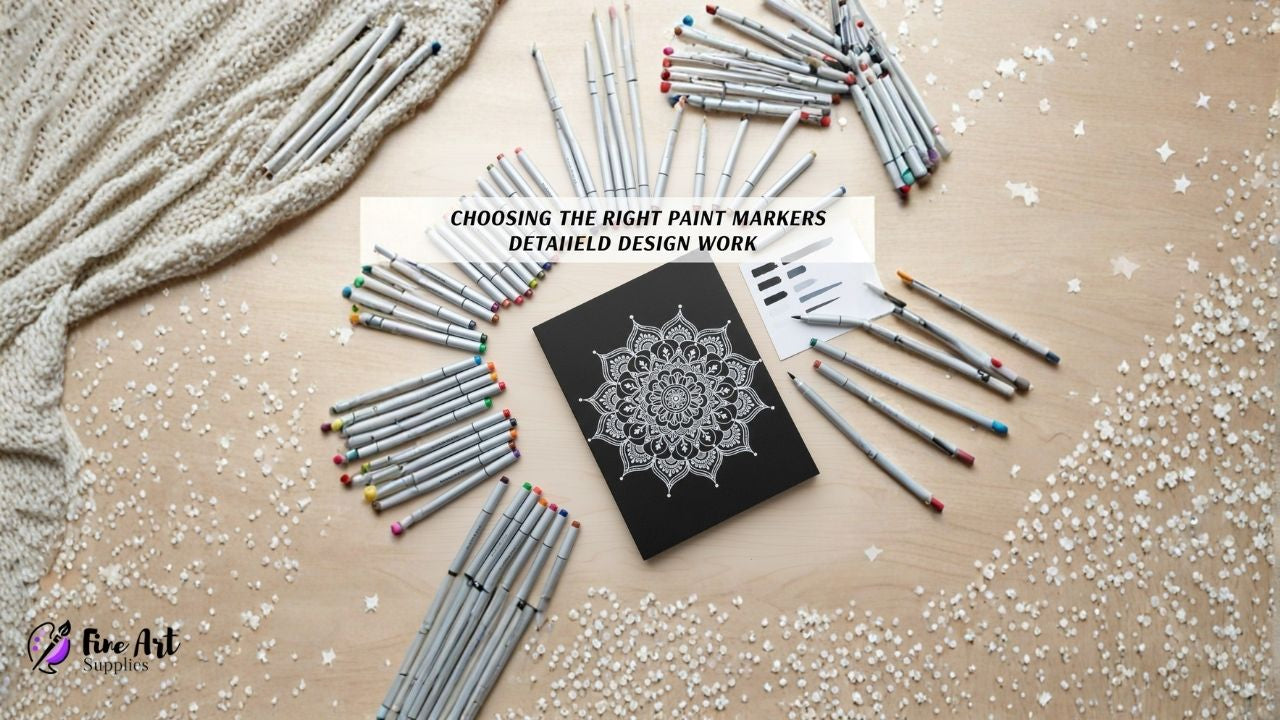
Choosing the Right Paint Markers for Detailed Design Work
Detailed design work leaves no room for guesswork. Whether you’re outlining miniature illustrations, adding highlights to acrylic paintings, customizing sneakers, or refining calligraphy strokes, the right paint markers can either sharpen your precision or compromise your results.
For artists in Pakistan students building portfolios, professionals taking commissions, or hobbyists refining their craft understanding how paint markers behave on different surfaces is essential. At Fine Art Supplies, we’ve seen how the right tools dramatically improve both control and confidence in fine detailing.
Understanding Paint Markers and Their Role in Fine Detail
The primary keyword here is paint markers, a high-intent search term widely used by artists and designers. But not all paint markers are created for intricate work.
Unlike standard permanent markers, paint markers use pigmented paint ink—usually acrylic or oil-based that sits opaquely on surfaces. This makes them ideal for:
-
Layering highlights over dark backgrounds
-
Adding crisp outlines to mixed media pieces
-
Detailing on glass, wood, canvas, metal, or plastic
-
Touch-ups on paintings
When selecting paint markers for detailed design work, the most important factors are nib size, ink opacity, drying time, and surface compatibility.
Choosing the Right Nib Size for Precision
Fine detailing demands control. The nib determines how much control you have.
Fine and Extra-Fine Tips
For intricate illustration, miniature art, mandala patterns, and line art, extra-fine and fine tips are essential. They allow for:
-
Sharp edges
-
Clean lettering
-
Controlled highlights
-
Small decorative motifs
Artists working on technical drawings or detailed sketchbook work typically prefer a 0.7mm to 1mm tip range.
Medium Tips for Controlled Fill
If your work blends outlining with small fills, a medium tip offers flexibility without losing accuracy. It’s particularly useful for mixed media artists who combine acrylic painting with marker detailing.
You can evaluate different tip options and surface compatibility within the Paint Markers collection, where nib size variations are clearly categorized for practical comparison.
Acrylic vs Oil-Based Paint Markers
One of the most searched secondary keywords is acrylic paint markers, and for good reason—they dominate detailed artwork.
Acrylic Paint Markers
Acrylic-based paint markers are:
-
Water-based
-
Quick-drying
-
Low odor
-
Layer-friendly
They work exceptionally well on canvas, paper, wood, and even fabric. For artists who build layers gradually, acrylic markers provide better control and easier correction.
Oil-Based Paint Markers
Oil-based versions offer:
-
Strong adhesion to non-porous surfaces
-
High durability
-
Water resistance
These are more suitable for glass, metal, ceramics, and outdoor use. However, they take longer to dry and require careful handling in detailed projects.
If you’re working on glass bottles or windows, understanding how paint behaves on smooth surfaces is equally important. Many artists transition between markers and Glass Paints depending on the level of opacity and finish required.
Surface Matters More Than You Think
Another common mistake artists make is choosing paint markers without considering the surface.
For detailed design work:
-
On paper or sketchbooks, choose quick-drying acrylic markers to avoid bleeding.
-
On canvas, ensure the surface is primed and fully dry before layering.
-
On glass or ceramic, use oil-based markers for durability.
-
On wood, lightly sand the surface for smoother strokes.
The smoother the surface, the sharper your lines will appear. Texture adds character—but it can reduce precision.
Ink Quality and Flow Control
High-quality paint markers should offer consistent ink flow without blotching or sudden bursts. Uneven flow disrupts detailing and wastes time correcting mistakes.
Professionals often test markers by:
-
Drawing slow, steady lines
-
Applying gentle pressure variations
-
Layering once dry
Reliable markers maintain opacity even in thin strokes. Inferior ones fade or streak when applied lightly.
Pairing paint markers with essential tools like blending stumps, precision brushes, and masking materials from the broader Art Accessories range can further refine detailing work.
Color Selection for Detailed Artwork
Many beginners focus on quantity of colors rather than quality. For intricate designs, you don’t need 48 shades you need:
-
Strong primary colors
-
Clean black and white
-
Metallic or pastel accents (if required)
Opaque white paint markers, in particular, are critical for highlights and corrections over darker layers.
Professional artists typically build a small, reliable set and expand only when needed. This ensures consistency in pigment and finish.
Common Mistakes When Using Paint Markers for Detail
Even experienced artists occasionally struggle with paint markers. The most frequent issues include:
-
Not shaking the marker thoroughly before use
-
Pressing too hard on fine tips
-
Layering before ink is fully dry
-
Storing markers horizontally
Small habits make a big difference in maintaining precision tools.
How to Decide What’s Right for You
If you are:
-
A student practicing line control → Choose affordable acrylic fine-tip markers.
-
A professional illustrator → Invest in archival-quality, fade-resistant acrylic markers.
-
A mixed media artist → Keep both acrylic and oil-based options for flexibility.
-
A DIY designer working on decor → Prioritize surface compatibility over brand variety.
Choosing paint markers isn’t about trends. It’s about control, surface interaction, and predictable results.
FAQs
What are the best paint markers for detailed art?
Fine-tip acrylic paint markers are best for detailed illustrations, calligraphy, and highlights due to their precision and quick drying time.
Are acrylic paint markers better than oil-based ones?
For most detailed artwork on paper or canvas, acrylic paint markers are easier to control. Oil-based markers work better on glass and metal.
Do paint markers bleed through paper?
Lower-quality markers may bleed. Using thicker, high-GSM paper reduces this issue significantly.
Can paint markers be layered?
Yes. Acrylic paint markers layer well once fully dry. Always wait a few minutes before applying another coat.
How long do paint markers last?
With proper storage and sealing caps tightly, quality paint markers can last several months to years depending on usage.
Are paint markers waterproof?
Oil-based markers are generally waterproof. Acrylic markers become water-resistant once dry but may vary by brand.
What tip size is best for fine detailing?
A 0.7mm to 1mm fine tip is ideal for precision and small-scale design work.