
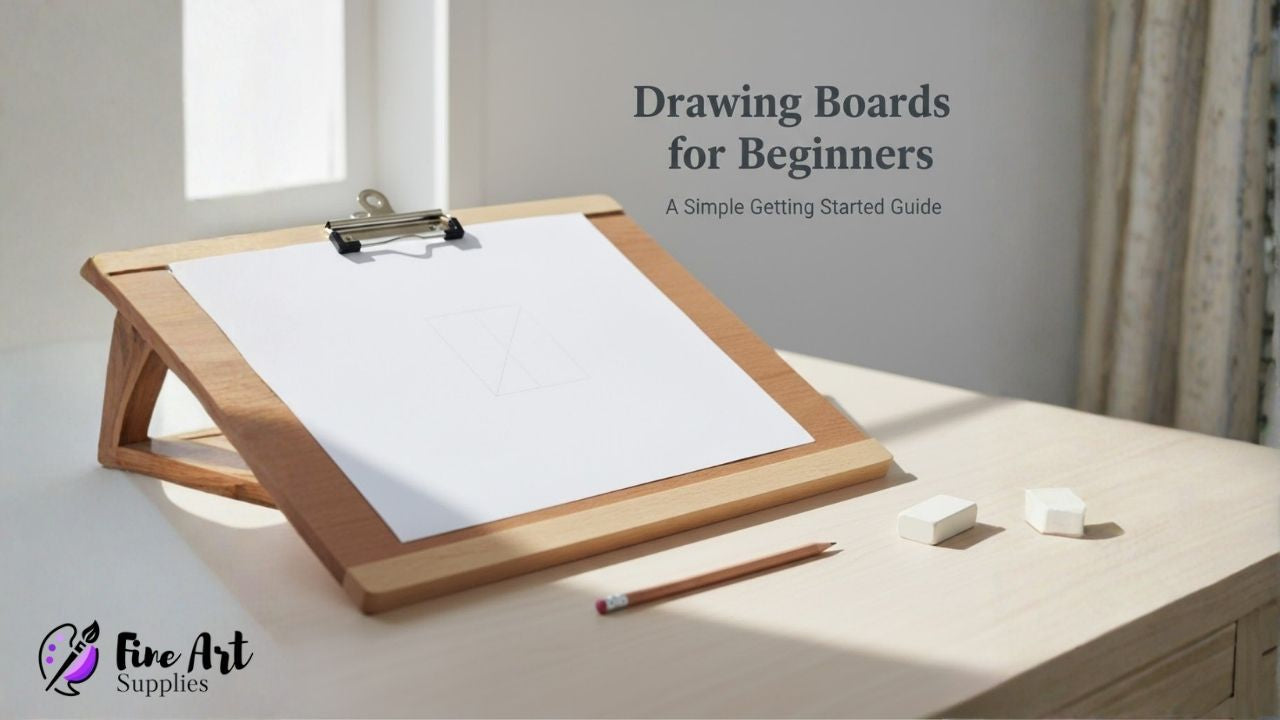
Starting out in drawing often feels simple at first. You grab a pencil, find a piece of paper, and begin. Very quickly, however, most beginners notice small frustrations. The paper slides, lines feel shaky, and longer practice sessions become uncomfortable. This is usually the point where a drawing board starts to make sense. For beginners and students in Pakistan, understanding what a drawing board is and how it helps can make the learning process calmer and more structured from the very beginning.
What Is a Drawing Board and Why It Matters for Beginners
A drawing board is a firm, flat surface designed to support paper while sketching, drawing, or drafting. Unlike a desk surface, which may have uneven texture or limited space, a drawing board offers consistency. For beginners, this consistency is important because early drawing skills depend heavily on control and hand coordination.
When the surface underneath your paper is stable, your hand movements become more predictable. Lines appear cleaner, shading feels smoother, and mistakes are easier to understand and correct. Many beginners find that once they start using a proper drawing board, their sketches immediately feel more controlled, even without changing their technique.
How a Drawing Board Improves Control and Comfort
One of the biggest challenges for beginners is maintaining steady pressure. Drawing on soft or uneven surfaces causes the pencil to react differently with every stroke. A drawing board removes that variable. The firm base ensures that your pencil pressure stays consistent across the entire page.
Comfort is another major benefit. Using a drawing board allows you to adjust the angle of your paper slightly, which reduces strain on the wrist, neck, and shoulders. This is especially helpful for students who spend longer periods practicing. Over time, better posture leads to longer, more focused drawing sessions without fatigue.
Choosing the Right Drawing Board Size for Beginners
Size selection does not need to be complicated. Beginners often assume that bigger is better, but that is not always true. The right size depends on the paper you use most frequently. For most beginners and students, an A3 board provides enough working space while remaining easy to handle and store.
If you mostly work on A4 sheets, choosing a board slightly larger than the paper allows room for clips and hand movement. Larger boards can be useful later, but starting with a manageable size helps beginners feel more confident and organized. Exploring different drawing board options can give you a clearer idea of what size fits your learning style.
Materials and Build Quality: What Beginners Should Look For
Drawing boards are commonly made from MDF, laminated wood, or durable plastic. For beginners, the most important factors are flatness and durability. The surface should remain smooth over time and resist bending or warping.
Extra features such as built-in clips or straight edges can be helpful, but they are not essential at the start. A simple, well-made board often works better than a complex one. Beginners benefit more from reliability than from advanced features they may not use yet.
Drawing Board vs Drawing Pad: Understanding Their Roles
A common point of confusion for beginners is the difference between a drawing board and a drawing pad. A drawing board is the support surface, while a drawing pad contains the paper you draw on. They work together, not as alternatives.
Using a drawing board underneath a drawing pad keeps the pages flat and prevents movement while sketching. This combination is especially useful when practicing techniques that require precision, such as line work or light shading. Beginners who understand this relationship early avoid unnecessary frustration and build a more effective setup.
Setting Up a Simple Drawing Workspace at Home
You do not need a dedicated studio to use a drawing board properly. A quiet table, good lighting, and a comfortable chair are enough. Place the board on the table and adjust it slightly if possible so that the surface is not completely flat. Even a small angle can improve visibility and reduce strain.
Keeping the workspace uncluttered also helps. When tools are within reach and distractions are minimal, practice becomes more consistent. This routine is often what separates beginners who progress steadily from those who lose motivation.
Common Beginner Mistakes When Using a Drawing Board
Many beginners press too hard with their pencil, assuming the board requires more force. In reality, the firm surface allows for lighter, more controlled strokes. Another mistake is ignoring posture. Leaning too close or drawing with a stiff wrist can limit movement and comfort.
Beginners also sometimes forget to secure the paper properly. If the paper shifts, the benefit of the board is reduced. Taking a moment to clip or align the paper makes a noticeable difference in the final result.
Learning Progress and When to Explore Other Surfaces
As skills improve, beginners naturally become curious about other drawing and painting surfaces. While a drawing board remains useful, learning about canvases and paper quality can broaden understanding. Reading educational resources such as guides on best canvas brands in Pakistan helps beginners see how surface choice affects different types of artwork without pushing them to upgrade too early.
The key is to let skill development guide decisions. A drawing board continues to support practice long after the beginner stage.
Frequently Asked Questions
Do beginners really need a drawing board?
A drawing board is not mandatory, but it provides stability, better posture, and improved control, which can make learning easier for beginners.
What size drawing board is best for students?
An A3 drawing board is usually ideal for students because it supports common paper sizes while remaining easy to manage.
Can I draw directly on a table instead?
You can, but tables often cause paper movement and uneven pressure. A drawing board offers a consistent surface that improves accuracy.
Is a drawing board suitable for children?
Yes. Drawing boards help children develop better hand control and maintain a comfortable drawing posture.
How should I care for a drawing board?
Keep it clean, avoid moisture, and store it flat to prevent warping or surface damage.
Can a drawing board be used for other art activities?
Yes. Drawing boards are useful for sketching, drafting, calligraphy practice, and other paper-based art activities.