
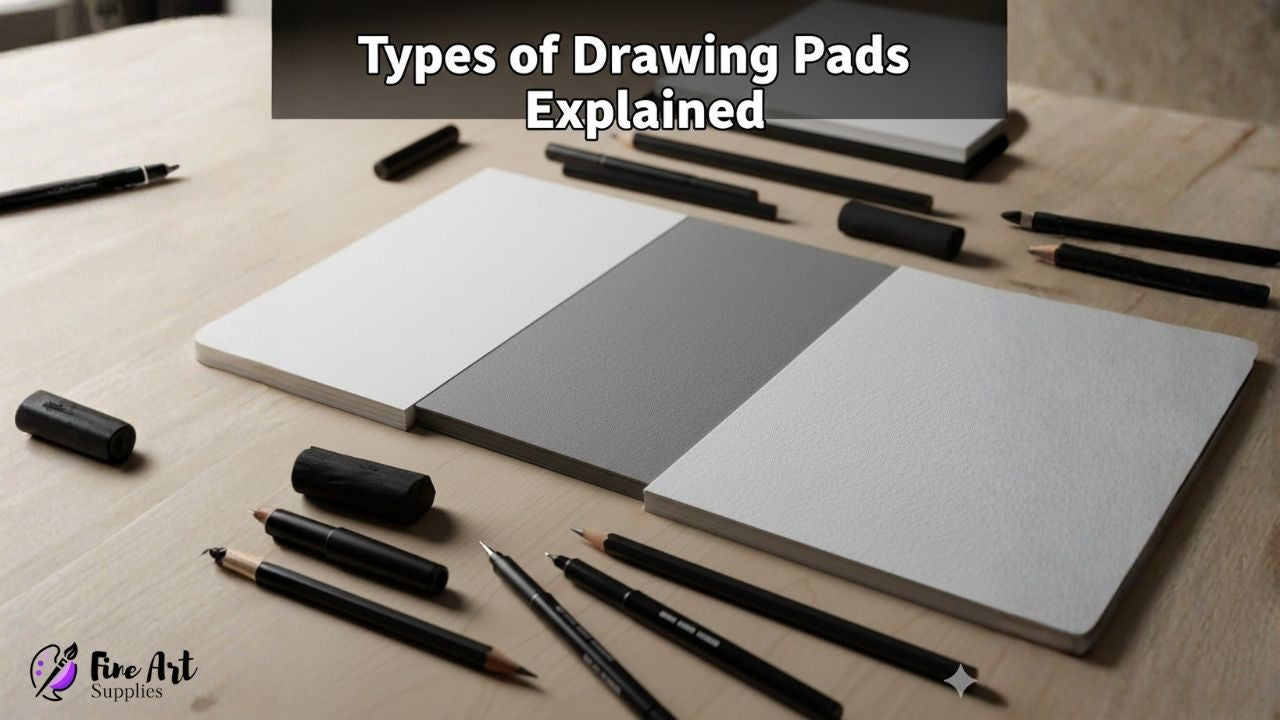
Every great artwork begins with the right surface, and for most artists, that journey starts with a drawing pad. But choosing a drawing pad isn't as simple as picking any sketchbook off the shelf. Different textures, weights, bindings, and finishes can dramatically influence how your pencils, charcoal, inks, and markers behave. Many beginners don’t realize this until their graphite starts smudging excessively, their ink bleeds through the page, or their charcoal refuses to blend the way it should. That confusion is exactly why artists in Pakistan increasingly rely on trusted stores like Fineartsupplies places where materials are curated with actual artist needs in mind.
This handbook is crafted to help you understand the different types of drawing pads, what sets them apart, and how each one supports a different artistic style. By the end, you’ll know precisely which pad suits your technique and why the surface beneath your pencil matters just as much as the pencil itself.
What Makes One Drawing Pad Different from Another?
Although drawing pads may look similar at first glance, the experience they provide varies dramatically. Texture is the first difference most artists notice. Some pads feel almost glass-smooth, perfect for ink or technical linework. Others have a subtle grain that grips graphite beautifully for portrait shading. Then there are pads with a deep tooth used for charcoal, pastels, and expressive sketching.
Another important factor is GSM, which refers to the thickness and strength of the paper. Lighter GSM suits quick sketches and practice work, while heavier GSM supports layering, erasing, pressure variations, and even light mixed-media applications. Binding also plays a major role. Hardbound pads are ideal for long-term work and portfolios, wire-bound pads flip comfortably for daily practice, and glue-bound pads allow you to detach sheets cleanly for framing or submissions.
These elements come together to create an experience that either supports your technique or holds it back something many artists discover the hard way when using low-quality paper that curls, tears, or refuses to blend.
Smooth Surface Drawing Pads (Hot Press)
Smooth surface pads are ideal for artwork that relies on precision. If your focus is clean linework, architectural drawing, technical illustration, anime-style art, fine inking, or realistic portrait sketching, a smooth pad gives you full control over every stroke. Because the surface has almost no texture, pencils glide effortlessly, allowing extremely fine detail. Ink sits neatly on top without feathering, something artists often struggle with when using regular paper.
Many professional illustrators rely on smooth pads because they deliver a polished finish that looks consistent across multiple drawings. Artists who explore realistic shading also enjoy how graphite transitions seamlessly without grain interference, creating soft gradients that are nearly photographic. Choosing a high-quality Drawing Pad with a smooth surface can completely change the refinement of your final artwork.
Medium Surface Drawing Pads
Medium texture pads are the most versatile and are usually the first recommendation for artists learning shading, structure, and drawing foundations. They strike a balance between smoothness and tooth, offering enough grip for controlled shading while staying clean enough for detailed work. This type of pad is often used in art academies and sketching courses across Pakistan because it adapts well to graphite, charcoal, colored pencils, and even light inks.
Artists who are still exploring their style will find medium pads extremely supportive because they allow a wide range of techniques without forcing the artist into one direction. Whether you’re working on figure studies, portrait mapping, landscapes, or everyday sketching, a medium surface pad gives you consistent performance that can handle pressure variation, blending, and layering with ease.
Rough Surface Drawing Pads (Cold Press)
Rough-textured pads are preferred by artists who work expressively or rely heavily on texture in their art. Charcoal, soft pastels, chalk, and textured graphite shading behave beautifully on rough surfaces because the tooth grabs the pigment and holds it in place. This allows deep shadows, dramatic shades, and expressive lines that simply cannot be achieved on smoother paper.
Artists who transition from smooth paper to textured pads often describe the shift as unlocking a completely new dimension in their art. The paper texture itself becomes part of the artwork, enhancing depth and emotion. This experience is similar to how painters evaluate canvas textures, something discussed in detail in the best canvas brands guide published on the Fine Art Supplies blog. Understanding texture gives artists more control across all mediums, including drawing.
Marker and Illustration Pads
Marker artists require surfaces that prevent bleeding, feathering, and uneven absorption. Marker-specific pads are engineered to keep ink on the surface rather than letting it seep through. This results in vibrant colors, controlled edges, and smooth blends crucial for character design, fashion illustration, anime art, and modern graphic work.
These pads also support brush pens, fineliners, and technical pens, making them essential for artists working on stylized, bold, or high-contrast artwork.
Cartridge Drawing Pads
Cartridge paper has a slightly textured yet sturdy surface, making it ideal for academic work, classroom sketching, and intermediate studies. Many students prefer them because they support graphite, charcoal, light watercolor, and ink without deteriorating. They are thicker and more durable than standard sketchbooks, which makes them perfect for assignments and practice pieces that need to be preserved.
Teachers often recommend cartridge pads to students transitioning into more detailed and structured drawing techniques. They can last longer than lightweight sketch pads, especially when used for heavy erasing and repeated layering.
Mixed Media Drawing Pads
Mixed media pads are designed for artists who don’t want to limit themselves. If your sketching involves graphite one day, watercolor washes the next, and ink the day after, a mixed media pad gives you the freedom to explore. These pads have the strength to handle wet media without buckling and the texture to support dry media comfortably.
Artists working on commissions, portfolio projects, or experimental art rely on mixed media pads because they eliminate the need for multiple surfaces. This versatility makes them one of the best choices for developing a dynamic body of work.
Loose Drawing Sheets for Final Artwork
Some artists prefer loose sheets rather than bound pads, especially when preparing final pieces for clients, exhibitions, or framing. High-quality drawing sheets provide durability, archival quality, and the freedom to work without worrying about tearing pages from a pad. These sheets also support heavier graphite, charcoal, and ink applications without warping.
Which Drawing Pad Should You Choose?
Below is a simple, helpful comparison that quickly shows which pad suits which medium:
|
Drawing Style |
Recommended Pad Type |
|
Realistic graphite & fine detail |
Smooth surface pad |
|
Academic sketching & versatility |
Medium surface pad |
|
Charcoal, pastels & textured work |
Rough surface pad |
|
Markers & ink illustrations |
Marker pad |
|
Mixed media artwork |
Mixed media pad |
This table makes it clear that each drawing style has a natural pairing with a specific surface, ensuring better results and more control.
FAQs
Which drawing pad is best for beginners?
A medium-surface drawing pad works for most drawing styles and is ideal for learners.
Do markers bleed on regular paper?
Yes, which is why marker pads are specially designed to prevent feathering and seepage.
Is high GSM better?
Higher GSM means stronger, thicker pages, which is ideal for layering and erasing.
Can I use charcoal on smooth pads?
You can, but rough or textured pads will give you much better results.
Are drawing sheets better for final artwork?
Yes, loose sheets provide professional presentation and durability.
Author Bio
Fine Art Supplies is Pakistan’s leading art store, offering premium drawing pads, sketch sheets, canvases, paints, and creative tools trusted by professionals and students alike. With a mission to educate and empower artists, Fine Art Supplies provides high-quality materials that help creators explore, experiment, and achieve their artistic potential