
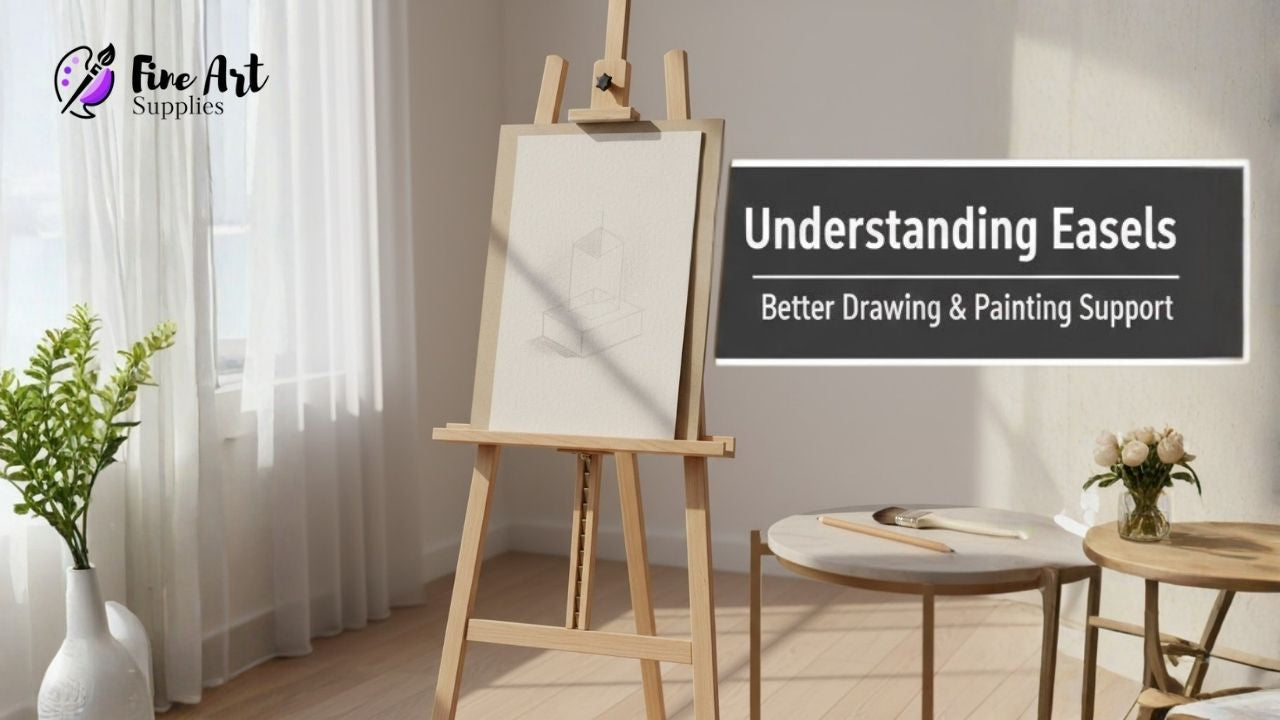
For many beginners, drawing and painting start on a table or desk. While this works at first, it often leads to discomfort, uneven strokes, and limited control. An easel changes that experience in subtle but important ways. It supports better posture, improves visibility, and helps artists interact with their work more naturally. This guide explains what easels are, how they support better drawing and painting, and why beginners and students benefit from using one early in their learning journey.
What Is an Easel and How It Works
An easel is a stand designed to hold drawing or painting surfaces upright or at an adjustable angle. It supports paper, boards, or canvases while allowing the artist to work comfortably from a standing or seated position. Unlike flat surfaces, an easel places the artwork closer to eye level, which improves perspective and reduces strain.
Many beginners pair an easel with a drawing board to keep paper firm while still benefiting from an upright working position. This combination helps maintain accuracy without compromising comfort.
Why Easels Improve Drawing and Painting Control
Control in art comes from a combination of posture, visibility, and hand movement. When working on a flat desk, the wrist and shoulder often carry unnecessary tension. An easel allows the arm to move more freely, which improves line flow and brush movement.
This freedom becomes especially noticeable during longer sessions. Artists who use an easel often find that their strokes feel lighter and more deliberate, especially when the artwork remains stable and well-positioned.
Easels and Better Posture for Beginners
Posture plays a larger role in art than many beginners realize. Poor posture leads to fatigue, which affects focus and consistency. An easel encourages a more upright position, keeping the neck and shoulders relaxed.
For students who practice regularly, this posture support helps prevent discomfort and allows for longer, more productive sessions. Over time, working comfortably builds discipline and makes daily practice more sustainable.
Types of Easels and Their Practical Uses
There are several types of easels, each suited to different environments. Tabletop easels are compact and ideal for small spaces, making them popular with students. Studio easels offer more stability and are often used for larger work. Field easels are lightweight and designed for portability.
Beginners exploring different setups often find it helpful to review a focused easels collection to understand how size, structure, and adjustability differ across models.
Easels for Painting and Color Work
Painting introduces additional challenges such as paint flow, layering, and drying time. An easel helps manage these factors by keeping the surface vertical. This position allows paint to settle naturally and makes it easier to observe color transitions and brushwork.
For beginners learning water-based paints, surface angle plays a key role in blending and control. Educational resources like water colors for beginners often highlight how working on an easel improves visibility and technique during early practice.
Setting Up an Easel at Home or School
An easel does not require a dedicated studio. A small corner with good lighting is enough. The key is to adjust the height so the center of the artwork aligns with eye level. This setup reduces neck strain and improves accuracy.
When beginners are unsure about basic setup or tool placement, referring to simple, beginner-focused guidance from trusted art supply sources like Fine Art Supplies can help clarify how different tools work together without overcomplicating the process.
Keeping tools within reach and maintaining a clean area around the easel helps maintain focus. Beginners who establish a simple, consistent setup tend to practice more regularly and see steady improvement.
Common Beginner Mistakes When Using an Easel
One common mistake is positioning the easel too low or too high, which forces awkward angles and reduces comfort. Another issue is ignoring stability. If the easel wobbles, it distracts from the drawing or painting process.
Beginners also sometimes rely too heavily on wrist movement instead of using the arm. An easel encourages broader motion, which supports better control and smoother results over time.
When to Introduce an Easel into Your Learning Process
There is no strict rule about when to start using an easel. Some beginners benefit from it immediately, while others transition after gaining basic confidence. Introducing an easel early often helps build good habits related to posture and perspective.
As skills progress, the easel continues to support more advanced work, making it a long-term tool rather than a temporary aid.
Frequently Asked Questions
Do beginners really need an easel?
An easel is not mandatory, but it improves posture, visibility, and control, which can make learning easier and more comfortable.
Can an easel be used for drawing and painting?
Yes. Easels support paper, boards, and canvases, making them suitable for both drawing and painting.
Is a tabletop easel enough for students?
For many students, a tabletop easel works well, especially in limited spaces, while still offering angle adjustment.
How high should an easel be positioned?
The center of the artwork should be close to eye level to maintain comfort and accuracy.
Can children use easels?
Yes. Easels help children develop better posture and coordination during creative activities.
Does an easel replace a drawing board?
No. Easels and drawing boards serve different purposes and often work best together