
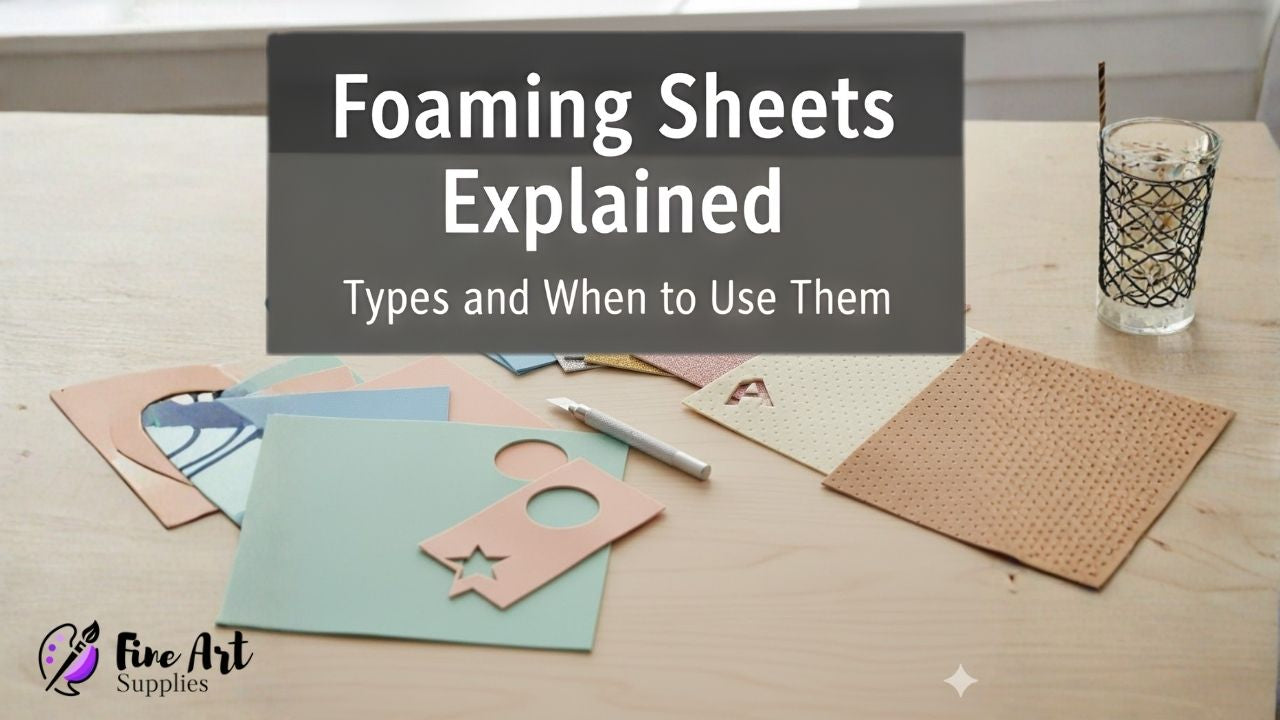
Foaming sheets are widely used in art, craft, and school projects because they are lightweight, flexible, and easy to work with. For beginners and students, they offer a forgiving surface that encourages creativity without the fear of tearing, heavy mess, or complicated tools. However, not all foaming sheets are the same. Different types serve different purposes, and understanding when to use each one helps improve both results and confidence.
This guide explains the main types of foaming sheets and how beginners can choose the right one for specific creative needs.
What Are Foaming Sheets?
Foaming sheets are soft, foam-based craft materials designed for cutting, shaping, layering, and decorating. Unlike paper or cardboard, they have a slight thickness and flexibility that makes them suitable for hands-on projects, especially for children and beginners.
Because they are easy to handle and safe to cut with basic tools, foaming sheets are commonly used in classrooms, home crafts, and beginner art activities.
Plain Foaming Sheets and Their Uses
Plain foaming sheets are the most basic and commonly used type. They come in solid colors and smooth finishes, making them ideal for simple shapes, lettering, and decorative elements. Beginners often start with plain sheets because they are versatile and easy to layer.
These sheets work well for cutting practice, school charts, greeting cards, and basic craft models. Their clean surface also makes them suitable for glue-based decorations such as beads or stickers. Many beginners explore different color options through curated foaming sheet collections to understand how color selection affects design and presentation.
Glitter Foaming Sheets for Decorative Projects
Glitter foaming sheets are coated with a sparkling surface that adds visual interest to craft projects. They are often used for decorative accents rather than full designs because the glitter finish is more expressive and eye-catching.
These sheets are best suited for banners, festive decorations, art borders, and special project highlights. Beginners should note that glitter sheets are more about appearance than precision. They are ideal when the goal is visual impact rather than fine detail.
Self-Adhesive Foaming Sheets for Easy Crafting
Self-adhesive foaming sheets come with a peel-and-stick backing, removing the need for glue. This makes them especially useful for younger students or beginners who want quick results without mess.
They are commonly used for classroom activities, scrapbooks, and layered designs where clean attachment is important. Because they simplify the process, self-adhesive sheets help beginners focus on creativity rather than assembly techniques.
Textured Foaming Sheets and Creative Expression
Textured foaming sheets feature patterns or embossed surfaces that add depth to projects. These are useful when beginners want to experiment with visual variety without complex techniques.
Textured sheets are often used in mixed-media projects or as background elements. They pair well with flat materials such as paper or boards, creating contrast and visual balance in simple designs.
Foaming Sheets vs Pastel Sheets
Beginners sometimes confuse foaming sheets with paper-based materials used for drawing. Foaming sheets are primarily for crafting and construction, while pastel sheets are designed for drawing and shading with soft pastels.
When working on drawing-based projects, using proper paper such as pastel sheet surfaces provides better grip for pigments and smoother blending. Foaming sheets, on the other hand, are better suited for cutting, shaping, and assembling craft elements rather than detailed drawing.
When to Choose Foaming Sheets for School Projects
Foaming sheets are especially popular in school environments because they are durable and forgiving. They do not crease easily and can withstand repeated handling. This makes them suitable for models, charts, and creative assignments that need to last longer.
For beginners, school projects are often the first introduction to structured creativity. Foaming sheets help reduce frustration and encourage experimentation, which supports learning and engagement.
Combining Foaming Sheets with Other Art Materials
As skills grow, beginners often start combining different materials in one project. Foaming sheets can be layered with paper, boards, or painted elements to create more complex designs.
Understanding how different surfaces behave is important at this stage. Educational resources, such as guides on mastering soft pastels, help learners recognize why certain materials work better for drawing while others suit construction and craft.
Common Beginner Mistakes When Using Foaming Sheets
One common mistake is using foaming sheets for detailed drawing work. Because they are soft, they do not support fine pencil control. Another mistake is applying excessive force while cutting, which can distort edges.
Beginners also sometimes mix foaming sheets with unsuitable adhesives or paints. Using simple craft glue and light decorative elements ensures better results and keeps projects neat.
Choosing the Right Foaming Sheet for Your Project
The best foaming sheet depends on the project goal. Plain sheets suit learning and basic crafts, glitter sheets enhance decoration, and self-adhesive sheets simplify assembly. Understanding these differences helps beginners choose materials confidently instead of relying on trial and error.
Over time, this knowledge saves effort and improves the overall quality of creative work.
Frequently Asked Questions
What are foaming sheets mainly used for?
Foaming sheets are mainly used for crafts, school projects, decorations, and simple creative models.
Are foaming sheets suitable for beginners?
Yes. They are easy to handle, safe to cut, and forgiving, which makes them ideal for beginners and students.
Can foaming sheets be used for drawing?
Foaming sheets are not ideal for detailed drawing. Paper-based surfaces work better for sketching and shading.
Do foaming sheets need special tools?
No. Basic scissors and simple craft glue are usually enough for most projects.
Are glitter foaming sheets difficult to work with?
They are easy to use but are better for decorative accents rather than detailed shapes.
How should foaming sheets be stored?
Store them flat and away from heat to prevent bending or surface damage.