
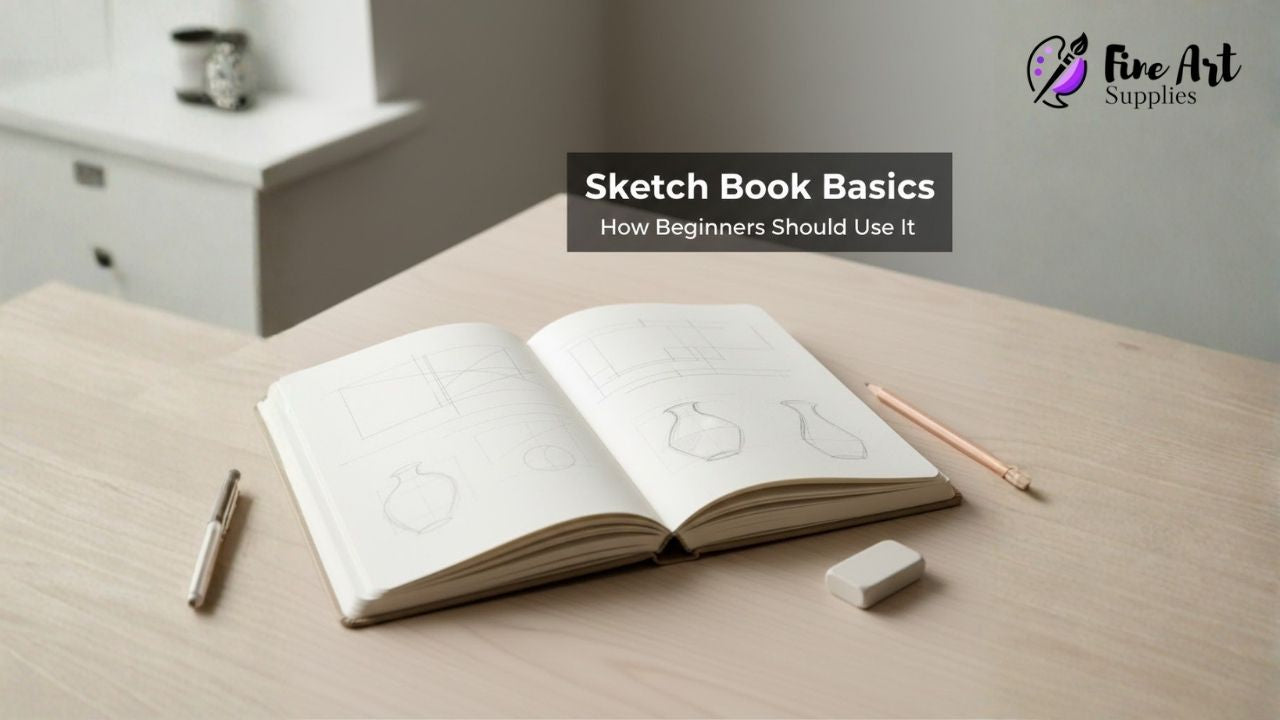
For many beginners, drawing starts with loose sheets of paper, quick doodles, or school notebooks. Over time, this scattered approach often makes it harder to track progress or build a consistent habit. A sketch book solves this problem quietly but effectively. It gives beginners a dedicated space to practice, experiment, and grow without pressure. This guide explains what a sketch book is, why it matters, and how beginners can use it in a practical, confidence-building way.
What Is a Sketch Book?
A sketch book is a bound collection of blank pages designed specifically for drawing and sketching. Unlike ordinary notebooks, sketch books use paper that can handle repeated pencil strokes, light shading, and frequent erasing. The binding keeps all work in one place, making it easier to review progress over time.
For beginners, a sketch book is less about creating perfect drawings and more about developing comfort with drawing itself. It becomes a personal space where mistakes are part of learning rather than something to avoid.
Why Beginners Should Start with a Sketch Book
Beginners often hesitate to draw because they feel every drawing must look finished. A sketch book removes that pressure. Since pages are meant for practice, beginners feel freer to explore shapes, lines, and ideas.
Using a proper Sketch Book also helps build consistency. When all sketches live in one place, it becomes easier to draw regularly, even if only for a few minutes a day. Over time, this habit leads to noticeable improvement in control and confidence.
How a Sketch Book Helps Improve Drawing Skills
Improvement in drawing comes from repetition and reflection. A sketch book supports both. Repeating similar exercises across pages helps train hand movement and observation. Looking back at older sketches shows progress that beginners often do not notice day to day.
Because the paper quality is consistent, beginners can focus on technique instead of adjusting to different surfaces. This consistency makes it easier to understand what works and what needs practice.
Choosing the Right Sketch Book for Beginners
Not all sketch books feel the same. Paper thickness, size, and binding affect how comfortable the book is to use. Beginners usually benefit from medium-weight paper that handles pencil work without smudging or tearing easily.
Size also matters. Smaller sketch books feel less intimidating and are easier to carry, which encourages frequent use. Larger sketch books offer more space for movement but may feel overwhelming at first. The best choice is the one that fits naturally into a beginner’s daily routine.
Sketch Books vs Sketch Pads
Beginners sometimes confuse sketch books with sketch pads. While both are used for drawing, they serve slightly different purposes. A sketch book is bound, which keeps work organized and protected. A sketch pad usually contains tear-off sheets, making it useful for individual drawings or assignments.
Using Sketch Pads can be helpful when beginners want to separate finished work from practice. However, for daily learning and habit building, a sketch book often works better because it keeps everything together and encourages continuity.
How Beginners Should Use a Sketch Book
A sketch book works best when it is used regularly, not occasionally. Beginners should treat it as a learning tool rather than a showcase. Simple exercises like line practice, shape studies, or quick observations from everyday objects are more valuable than aiming for perfect drawings.
It also helps to draw lightly at first and avoid erasing too much. Leaving mistakes visible allows beginners to understand where improvement is needed. Over time, this approach builds confidence and reduces fear of making errors.
Using a Sketch Book Alongside Other Art Surfaces
As beginners gain confidence, they often become curious about other surfaces such as drawing boards or canvases. A sketch book remains useful even then, especially for planning and testing ideas before moving to larger or more permanent surfaces.
Learning how different surfaces behave helps beginners make better material choices. Reading educational guides like best canvas brands in Pakistan gives context on why artists choose different surfaces at different stages, without rushing beginners into advanced materials too early.
Common Beginner Mistakes When Using a Sketch Book
One common mistake is skipping pages or tearing them out after a drawing feels unsuccessful. This breaks the sense of progress and makes learning feel scattered. Another mistake is saving the sketch book only for “good days,” which limits practice.
Beginners also sometimes avoid experimenting because they want the sketch book to look neat. In reality, messy pages often reflect the most learning. A sketch book should show growth, not perfection.
Building a Simple Daily Sketch Book Habit
Consistency matters more than time spent. Even ten minutes a day can lead to steady improvement. Keeping the sketch book nearby makes it easier to pick up during short breaks or quiet moments.
Beginners who treat their sketch book as a regular companion rather than a special tool tend to develop stronger observation skills and a more relaxed relationship with drawing.
Frequently Asked Questions
What is the main purpose of a sketch book?
A sketch book is mainly used for practice, exploration, and developing drawing skills over time.
Should beginners draw every day in a sketch book?
Daily drawing is helpful, but consistency matters more than frequency. Even regular short sessions are effective.
Can a sketch book be used for finished drawings?
Yes, but its primary role is practice. Finished work can also be created elsewhere if preferred.
Is expensive paper necessary for beginners?
No. Medium-quality paper is sufficient for learning and skill development.
Can children use sketch books?
Yes. Sketch books help children build confidence and improve coordination through regular drawing.
How long does a sketch book usually last?
It depends on usage. Some beginners fill one quickly, while others use the same book over several months.