
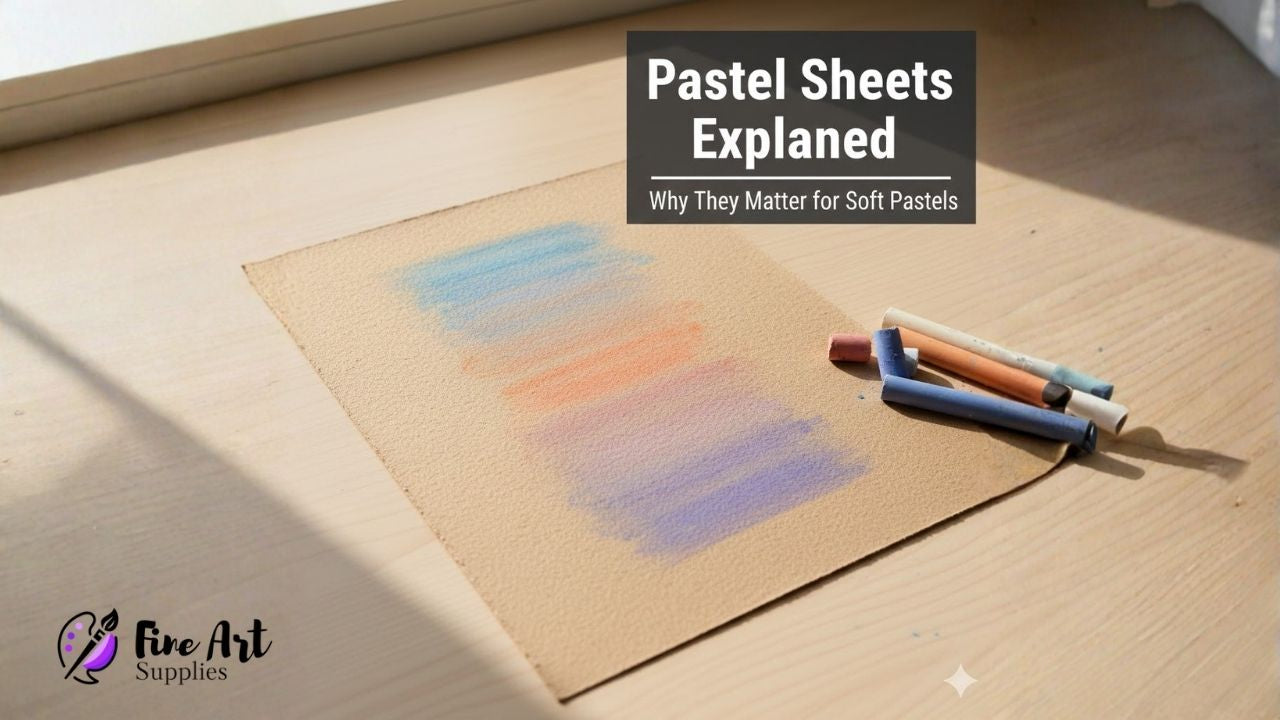
Soft pastel drawing is often one of the most exciting stages for beginners. The colors are vibrant, blending feels intuitive, and results appear quickly. At the same time, many learners struggle with muddy colors, poor layering, or pastels that refuse to stay in place. In most cases, the issue is not technique alone. The surface being used plays a major role. This is where pastel sheets become essential. Understanding what a pastel sheet is and why it matters can completely change how soft pastels behave on the page.
What Is a Pastel Sheet?
A pastel sheet is a specially designed paper surface created to hold dry pigments such as soft pastels. Unlike regular drawing paper, pastel sheets have a textured surface that grips pigment instead of letting it slide or fall away. This texture allows multiple layers of color to sit on top of each other without excessive smudging.
Most pastel sheets are thicker and stronger than ordinary paper. This strength is necessary because soft pastel work often involves blending, pressure, and repeated layering. Beginners usually notice a clear difference the moment they switch from standard paper to proper pastel sheets, especially in how colors appear brighter and more controlled.
Why Surface Texture Matters in Soft Pastel Drawing
Soft pastels rely on friction. When the surface has enough texture, pigment particles catch onto the paper and stay in place. Smooth paper lacks this grip, which causes colors to look faded or uneven.
The textured surface of a pastel sheet creates tiny valleys that hold pigment. This allows beginners to build color gradually, blend gently, and correct mistakes without damaging the paper. Texture also helps prevent excessive dust loss, which is a common frustration when learning soft pastel techniques.
How Pastel Sheets Improve Color Blending
Blending is one of the defining features of soft pastel art. On the wrong surface, blending quickly turns messy. On a pastel sheet, blending becomes more predictable and controlled.
Because the paper holds pigment in layers, beginners can blend lightly without losing earlier colors. This makes it easier to create smooth gradients and subtle transitions. Over time, learners begin to understand how pressure, layering order, and surface texture work together, which builds confidence and consistency.
Pastel Sheets vs Regular Drawing Sheets
Many beginners start pastel work on standard drawing paper because it is readily available. While this works for initial experiments, it often limits progress. Regular drawing sheets are designed for pencils and light shading, not heavy pigment application.
A clear explanation of paper differences can be found in guides like what are drawing sheets and how to choose the right one, which helps beginners understand why certain papers suit certain tools. Pastel sheets are specifically engineered to handle dry pigments, making them a better match for soft pastels than general-purpose paper.
Types of Pastel Sheets Beginners Encounter
Pastel sheets come in different textures and finishes. Some have a fine grain, while others are more heavily textured. Fine-grain sheets are often easier for beginners because they allow smoother blending and more control. Heavily textured sheets can hold more layers but may feel difficult at first.
Color also matters. Many pastel sheets are toned rather than white. Neutral shades such as grey, beige, or light brown help beginners judge highlights and shadows more accurately. Starting with toned paper often improves contrast and makes colors appear more vibrant.
Using Pastel Sheets for Practice and Learning
Beginners should treat pastel sheets as learning surfaces rather than display materials. Practicing basic strokes, blending exercises, and color layering helps develop control without pressure. Light pressure is usually more effective than heavy application, especially in the early stages.
It is also helpful to work section by section instead of covering the entire sheet at once. This allows beginners to observe how pigment behaves and how much texture remains for additional layers. Over time, this awareness leads to better planning and cleaner results.
When Foaming Sheets Are Not the Right Choice
Some beginners experiment with various craft materials before settling on proper art paper. While Foaming sheets are excellent for crafts and school projects, they are not suitable for soft pastel drawing. Their smooth, flexible surface does not hold pigment and can lead to frustration.
Understanding the role of each material helps beginners avoid unnecessary mistakes. Pastel sheets are designed for pigment control, while foaming sheets serve a completely different creative purpose.
How Pastel Sheets Support Skill Development
Learning soft pastels is as much about surface awareness as it is about color choice. Pastel sheets allow beginners to experiment safely, knowing the paper can handle erasing, layering, and blending. This freedom encourages exploration rather than hesitation.
As confidence grows, learners begin to recognize how different textures affect results. This knowledge carries over into more advanced work and helps artists choose surfaces intentionally rather than by trial and error.
Building a Reliable Pastel Setup
A simple pastel setup includes soft pastels, a stable drawing surface, and the right paper. Pastel sheets form the foundation of this setup. Pairing them with good lighting and a clean workspace makes practice more enjoyable and productive.
Beginners who build their setup around reliable materials tend to practice more consistently. Access to well-curated art resources from trusted suppliers like Fine Art Supplies helps learners find appropriate materials without feeling overwhelmed by options.
Common Beginner Mistakes When Using Pastel Sheets
One common mistake is pressing too hard too early. Excessive pressure fills the paper’s texture quickly, leaving no room for layering. Another mistake is over-blending, which can dull colors.
Beginners also sometimes ignore paper color, choosing white sheets by default. Experimenting with toned pastel sheets often leads to better understanding of light and shadow. Recognizing these small adjustments early improves long-term progress.
When Pastel Sheets Become Essential
Pastel sheets are not mandatory for the very first attempt at soft pastels, but they quickly become essential once beginners want control and consistency. When colors stop sticking or blending feels unpredictable, the surface is usually the limiting factor.
Switching to proper pastel sheets removes many technical barriers and allows beginners to focus on learning technique instead of fighting materials.
Frequently Asked Questions
What is a pastel sheet used for?
A pastel sheet is used for soft pastel drawing, providing texture that helps hold pigment and support layering and blending.
Can beginners use pastel sheets?
Yes. Pastel sheets are especially helpful for beginners because they make blending and color control easier to manage.
Are pastel sheets different from drawing paper?
Yes. Pastel sheets have a textured surface designed for dry pigments, while drawing paper is made for pencils and light shading.
Should beginners choose textured or smooth pastel sheets?
Beginners usually find lightly textured pastel sheets easier to control while learning basic techniques.
Can pastel sheets handle erasing and corrections?
Yes. Good-quality pastel sheets can handle light erasing and reworking without damaging the surface.
Do pastel sheets come in different colors?
Yes. Pastel sheets are available in various tones, which can help improve contrast and color balance in drawings.