
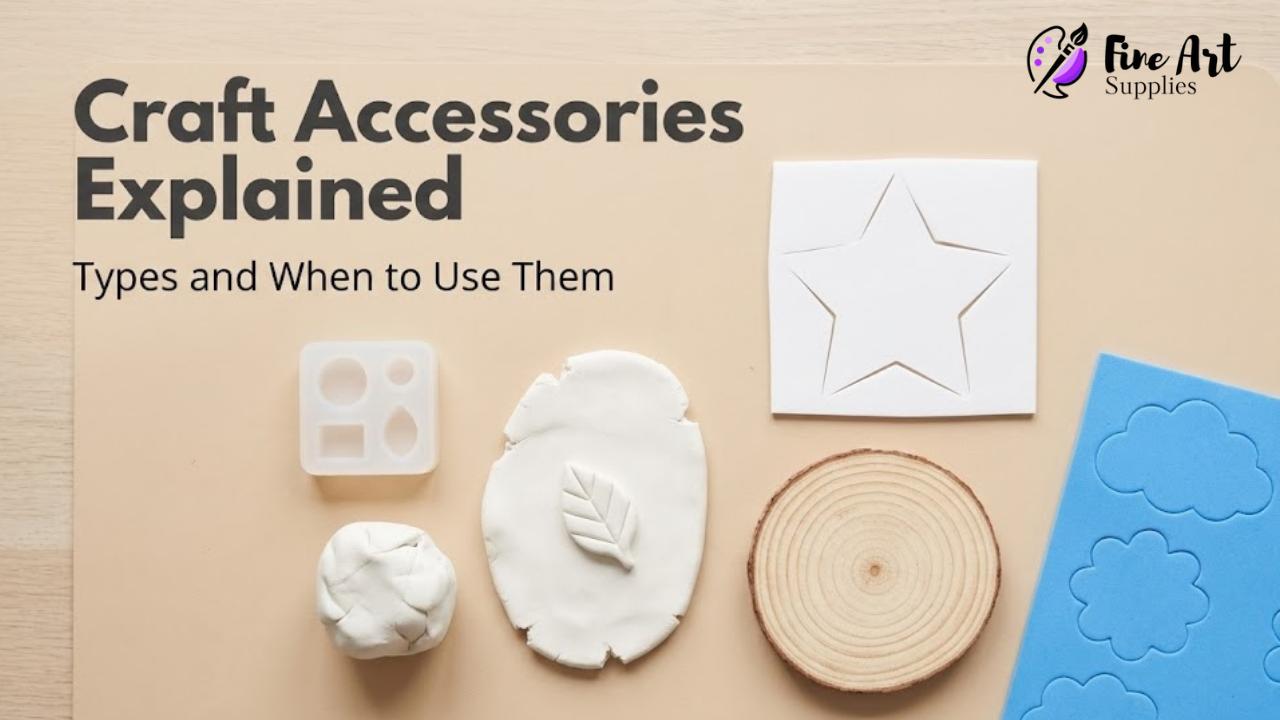
Craft accessories play a quiet but essential role in creative work. They are the supporting materials that turn simple ideas into finished projects, whether the goal is learning, experimentation, or decoration. For beginners and students, understanding which craft accessory to use and when prevents frustration and helps projects feel more achievable. This pillar guide explains the most practical types of craft accessories, how they are commonly used, and how to choose them with confidence.
What Are Craft Accessories?
Craft accessories are materials and tools used alongside basic art supplies to shape, build, decorate, or finish creative work. Unlike drawing or painting tools, accessories often focus on construction, texture, and form. They are widely used in school projects, DIY crafts, and beginner creative activities.
A well-rounded overview of available materials can be explored through curated hubs like Craft Accessories, which organize materials by purpose rather than overwhelming beginners with choices.
Why Choosing the Right Craft Accessory Matters
Using the wrong material can make even simple projects feel difficult. Some accessories are flexible, others rigid. Some are meant for shaping, while others are decorative. Knowing when to use each one helps beginners work more efficiently and enjoy the process rather than struggle with it.
Craft accessories also influence durability. A project meant for display may need sturdier materials than one designed for temporary classroom use. Matching the accessory to the project goal is a key learning step.
Silicone Resin Molds for Shaping and Casting
Silicone resin molds are used to create consistent shapes using resin or similar casting materials. Their flexibility allows finished pieces to be removed easily without breaking. This makes them suitable for beginners who are learning how casting works.
Projects such as keychains, small decorative items, and simple molds benefit from silicon resin mold options because they reduce errors and allow repeated use. Beginners should start with small designs to understand curing and release before attempting complex shapes.
Art Clay for Modeling and Hand-Built Forms
Art clay is a soft, moldable material used to create shapes by hand. It is ideal for sculpting, texture practice, and three-dimensional learning activities. Because it responds directly to hand pressure, art clay helps beginners develop spatial awareness and form control.
Using art clay works well for school models, small sculptures, and practice pieces. Beginners benefit from starting with simple forms and gradually experimenting with details as confidence grows.
Thermopol Sheets for Lightweight Craft Construction
Thermopol sheets are lightweight and easy to cut, making them popular for school crafts and model-making. They hold shape better than paper and are often used where rigidity is needed without heavy materials.
These sheets are useful for building structures, backgrounds, or raised elements in craft projects. Beginners appreciate thermopol because it balances structure and ease of use, reducing the risk of tearing or bending during assembly. Exploring thermopol options helps learners understand how thickness and size affect stability.
Wooden Slices for Natural Texture and Decor
Wooden slices introduce a natural element into craft projects. They are commonly used as bases for painting, engraving practice, or decorative displays. Their solid surface makes them suitable for projects meant to last longer.
Using wooden slice materials works well for signage, nameplates, or simple decor pieces. Beginners should be aware that wood behaves differently from paper or foam and may require different adhesives or surface preparation.
Foaming Sheets for Safe and Flexible Crafting
Foaming sheets are soft, colorful, and easy to cut. They are commonly used in school crafts and beginner projects because they are forgiving and safe. Foaming sheets are ideal for layered designs, shapes, and decorative elements rather than detailed drawing.
A focused explanation of how these materials work can be found in guides like different types of foaming sheets and when to use them, which helps beginners understand why foam is suited to crafting rather than fine art techniques.
How to Combine Craft Accessories in One Project
As skills develop, beginners often start combining materials. For example, a wooden slice can act as a base, art clay can form raised details, and thermopol can provide structure. Silicone molds may add decorative elements, while foaming sheets enhance color and contrast.
Combining accessories works best when each material has a clear role. Understanding strengths and limitations helps prevent cluttered designs and structural issues.
Common Beginner Mistakes with Craft Accessories
One common mistake is using heavy materials for simple projects. Another is applying the same adhesive or technique to all materials without considering compatibility. Beginners also sometimes rush assembly before understanding how materials behave.
Avoiding these mistakes starts with learning. Choosing appropriate accessories for each task builds confidence and reduces wasted effort.
When to Use Craft Accessories for Learning vs Decoration
Craft accessories serve different purposes depending on the goal. For learning, flexible and forgiving materials work best. For decoration or display, sturdier materials may be more appropriate.
Beginners benefit from separating practice projects from display projects. This mindset reduces pressure and encourages experimentation without fear of mistakes.
Building a Beginner-Friendly Craft Setup
A simple craft setup does not need every material. A few versatile accessories are enough to start. Over time, beginners can expand based on interest and project needs.
Reliable sourcing also matters. Platforms like Fine Art Supplies help beginners explore craft materials in an organized way, making it easier to understand what each accessory is used for without confusion.
How Craft Accessories Support Creative Confidence
Craft accessories remove limitations. They allow beginners to explore ideas that go beyond flat drawings. This hands-on interaction builds confidence and makes learning more engaging.
As projects become more complex, understanding accessories becomes a creative advantage. Beginners who learn this early develop stronger problem-solving skills in art and design.
Frequently Asked Questions
What are craft accessories mainly used for?
Craft accessories are used for shaping, building, decorating, and finishing creative projects.
Are craft accessories suitable for beginners?
Yes. Many craft accessories are designed specifically for safe and easy beginner use.
Can multiple craft accessories be used in one project?
Yes. Combining materials often enhances creativity when each accessory has a clear purpose.
Is art clay better than foam for beginners?
They serve different purposes. Art clay is better for sculpting, while foam is better for lightweight decorative work.
Do beginners need professional tools for crafting?
No. Simple, beginner-grade materials are enough for learning and experimentation.
How do I know which craft accessory to choose?
Start by identifying the project goal, then choose materials that support that purpose without overcomplicating the process.