
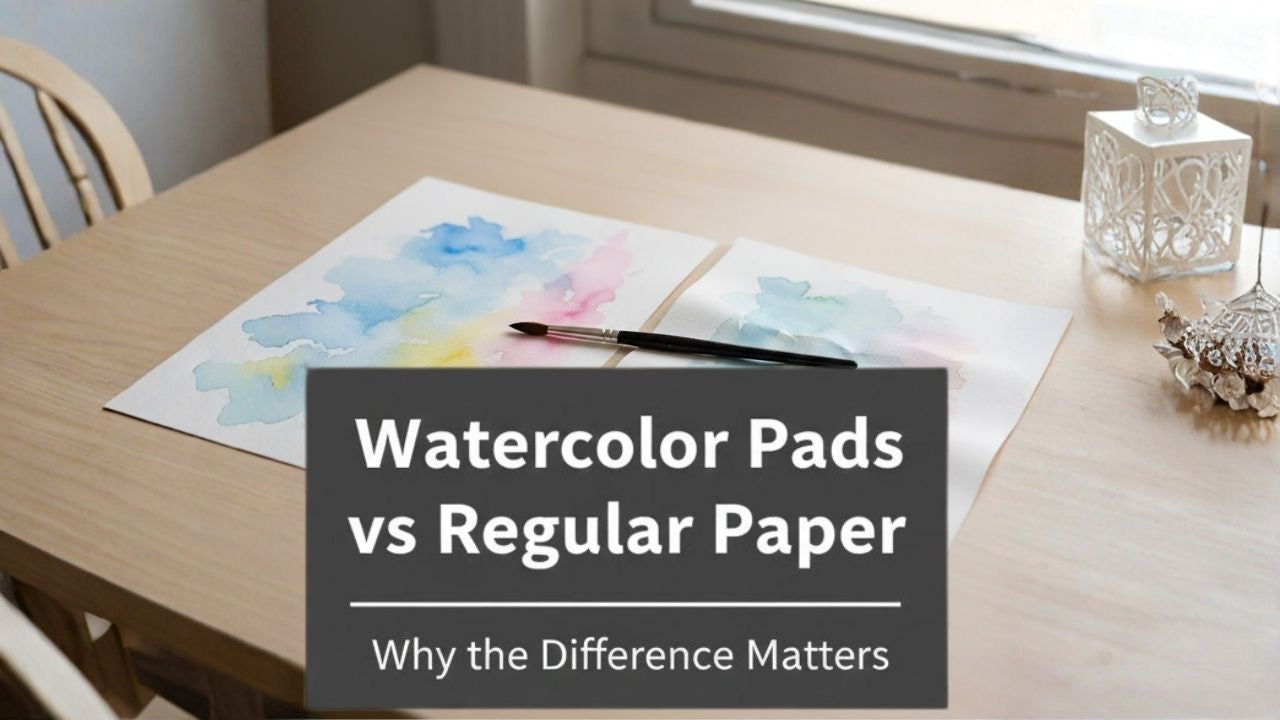
Beginners often assume that any paper can be used for watercolor painting. At first glance, paper may look similar, but once water and pigment are involved, the differences become very clear. Paint pools unevenly, paper curls, colors lose brightness, and control feels difficult. These problems usually have nothing to do with skill level. They come from using paper that is not designed for watercolor. Understanding why watercolor pads are different from regular paper helps beginners avoid frustration and build better painting habits from the start.
How Watercolor Painting Interacts with Paper
Watercolor behaves differently from pencils or dry media. It relies on water to move pigment across the surface. When paper cannot handle moisture properly, the paint spreads unpredictably or sinks too quickly into the fibers. Regular paper absorbs water unevenly, which leads to patchy color and weak blending.
Watercolor paper is made to manage moisture. It controls how water sits, moves, and dries on the surface. This control allows beginners to focus on learning brush techniques, color mixing, and layering instead of fighting the paper.
What Makes Watercolor Pads Different
Watercolor pads are made with paper specifically designed to handle water-based paint. The fibers are stronger, the surface is treated, and the sheets are bound in a way that helps reduce warping. These pads keep pages flat while painting and allow for repeated layering.
Using proper watercolor pads gives beginners more time to work with wet paint before it dries. This extra control makes blending smoother and corrections easier, especially during early practice.
Paper Weight and Thickness Explained
One of the biggest differences between watercolor paper and regular paper is weight. Regular paper is thin and flexible, which causes it to bend or tear when wet. Watercolor paper is thicker and heavier, allowing it to absorb water without losing structure.
Heavier paper stays flatter and supports multiple layers of paint. For beginners, this means fewer interruptions caused by buckling or puddling. Learning becomes more consistent because the surface responds the same way each time.
Surface Texture and Paint Control
Watercolor paper has a textured surface, often described as rough, cold-pressed, or hot-pressed. This texture affects how paint spreads and settles. Regular paper is usually too smooth or inconsistently textured, which causes watercolor to behave unpredictably.
Textured watercolor paper holds pigment evenly and allows subtle variations in tone. Beginners benefit from this because it makes brush strokes more visible and blending more forgiving. Smooth regular paper often causes paint to run uncontrollably or dry unevenly.
Water Absorption and Drying Behavior
Regular paper absorbs water too quickly. When this happens, pigment sinks into the paper fibers before blending can occur. Colors look dull, and correcting mistakes becomes difficult.
Watercolor paper is sized to slow absorption. This gives painters more working time and better control over edges and gradients. Beginners notice that colors stay vibrant and layers remain visible, which builds confidence and encourages experimentation.
Watercolor Pads vs Sketch Pads
Sketch pads and watercolor pads are designed for different purposes. Sketch pads are ideal for pencils, charcoal, and light shading. They are not built to handle moisture. Watercolor pads are specifically made for wet techniques and repeated layering.
Beginners often use sketch pads because they are familiar and affordable. While sketch pads work well for drawing practice, they limit progress in watercolor painting. Understanding this difference early prevents unnecessary frustration.
A broader explanation of pad types can also be found in educational guides like different types of drawing pads explained, which helps beginners choose the right surface for each medium.
Why Regular Paper Leads to Common Beginner Problems
When beginners paint on regular paper, they often experience curling edges, torn surfaces, and muddy colors. These issues make learning feel harder than it needs to be. Beginners may assume they lack skill, when in reality the paper is the problem.
Watercolor pads remove many of these obstacles. They allow learners to focus on brush control, water ratios, and color interaction. This clarity speeds up learning and makes practice sessions more enjoyable.
Using Watercolor Pads for Practice and Learning
Watercolor pads are not just for finished artwork. They are excellent learning tools. Beginners can practice washes, gradients, and layering without worrying about damaging the paper. Mistakes become part of the process instead of a setback.
Using a dedicated pad also keeps work organized. Beginners can look back at earlier pages to see progress and understand how their control has improved over time. This reflection is an important part of skill development.
When Watercolor Pads Become Essential
At the very first stage, beginners may experiment with watercolor on any paper available. However, once they start learning blending, layering, and brush control, watercolor pads become essential. Without the right paper, progress slows and frustration increases.
Switching to watercolor pads often leads to immediate improvement. Colors behave better, paper stays flat, and techniques feel easier to understand. This change helps beginners stay motivated and consistent.
Choosing the Right Place to Learn and Buy Art Supplies
Access to proper materials plays a major role in learning any art form. Beginners benefit from guidance and curated selections that match their skill level. Platforms like Fine Art Supplies help learners explore the right tools without confusion, making it easier to choose paper that supports growth rather than limiting it.
Frequently Asked Questions
Can I use regular paper for watercolor practice?
Regular paper can be used for very basic experimentation, but it does not support proper watercolor techniques and often leads to poor results.
What is the main benefit of watercolor pads?
Watercolor pads control water absorption, reduce warping, and allow better blending and layering.
Are watercolor pads suitable for beginners?
Yes. They make learning easier by removing paper-related problems and allowing beginners to focus on technique.
Why does watercolor paper feel rough?
The texture helps hold pigment and control how paint spreads across the surface.
Can watercolor pads handle erasing or corrections?
Good-quality watercolor paper can handle light corrections and reworking better than regular paper.
Should beginners buy expensive watercolor pads?
No. Beginner-grade watercolor pads are sufficient for learning and skill development.